Ivy Global
Improving the way students study.
Ivy Global was created to help students study and feel confident when preparing for the SAT and ACT.

- 10 months
- Duration
- 2
- Designers
- 1
- Developer
- 1
- Project manager
- 2021
- Year
Role · Lead UI/UX designer
I led the UI and UX design, working closely with the head of design for feedback and collaborating with the project manager to keep everything aligned and running smoothly.
The challenge
To level the playing field in test prep, Riiid Labs developed an AI-powered, budget-friendly platform that gives all students access to high-quality practice tests.
The goal: identify user pain points and opportunities to build a more accessible, personalized test-prep experience for high school students.

Insights
To understand the real struggles students face, we spoke with former SAT and ACT test-takers about their experiences.
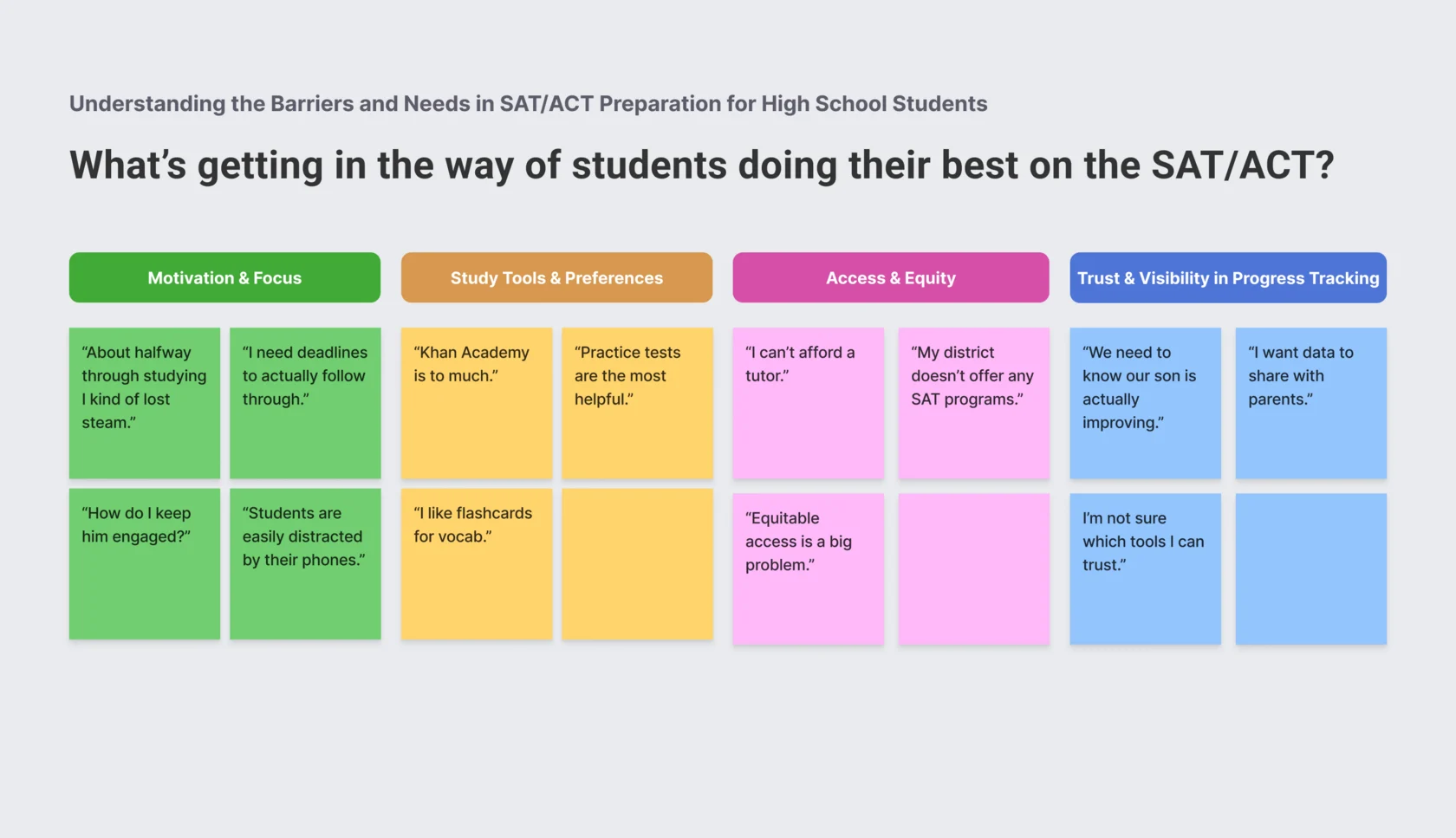
After transcribing all interviews, we created an affinity map in FigJam to cluster themes across different user types. It surfaced the core insights that directly informed our feature priorities.
Motivation & focus
- “About halfway through studying I kind of lost steam.”
- “I need deadlines to actually follow through.”
- “How do I keep him engaged?”
- “Students are easily distracted by their phones.”
Study tools & preferences
- “Khan Academy is too much.”
- “Practice tests are the most helpful.”
- “I like flashcards for vocab.”
Access & equity
- “I can't afford a tutor.”
- “My district doesn't offer any SAT programs.”
- “Equitable access is a big problem.”
Trust & visibility in progress tracking
- “We need to know our son is actually improving.”
- “I want data to share with parents.”
- “I'm not sure which tools I can trust.”
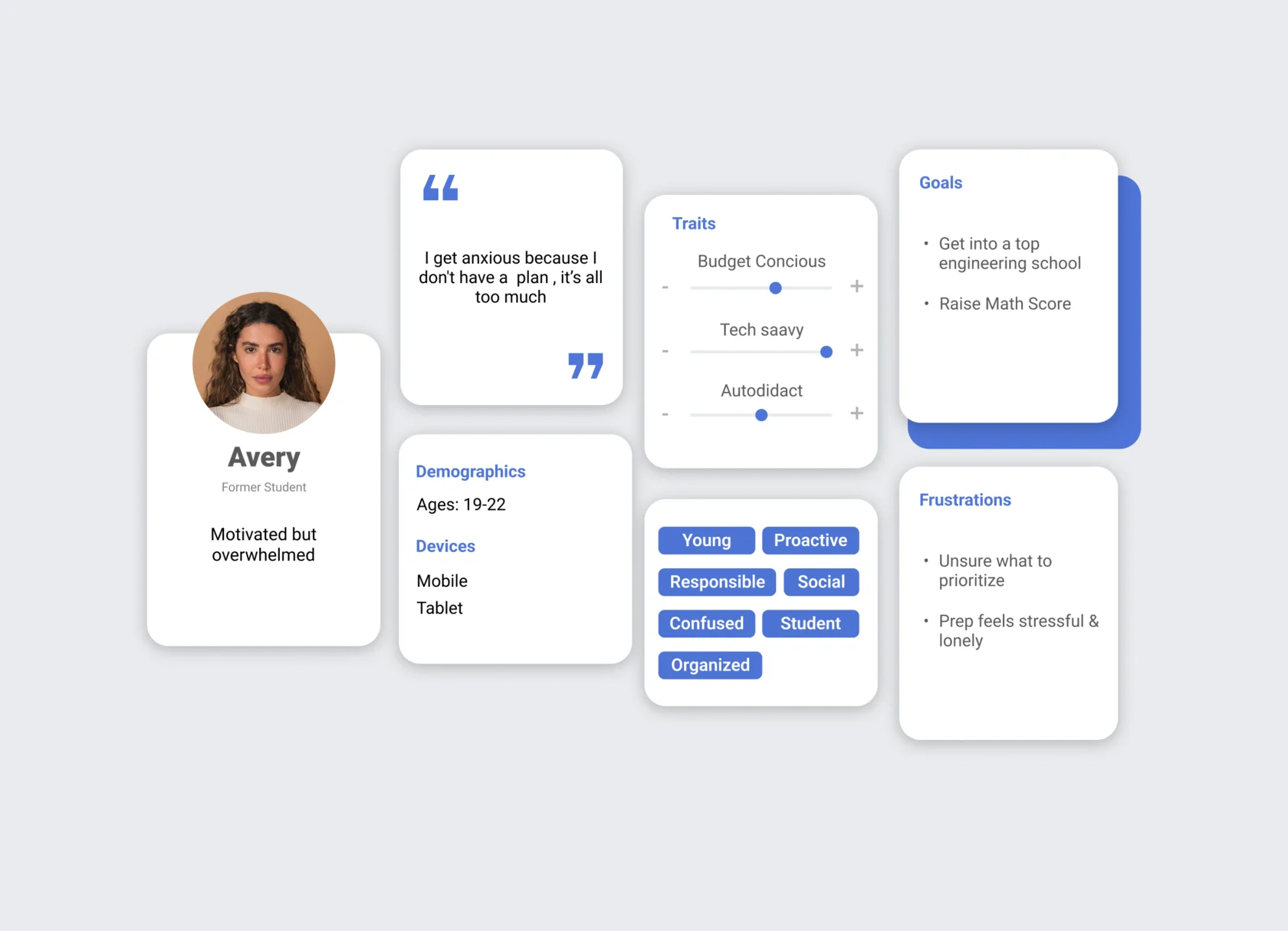
Main users, high school students
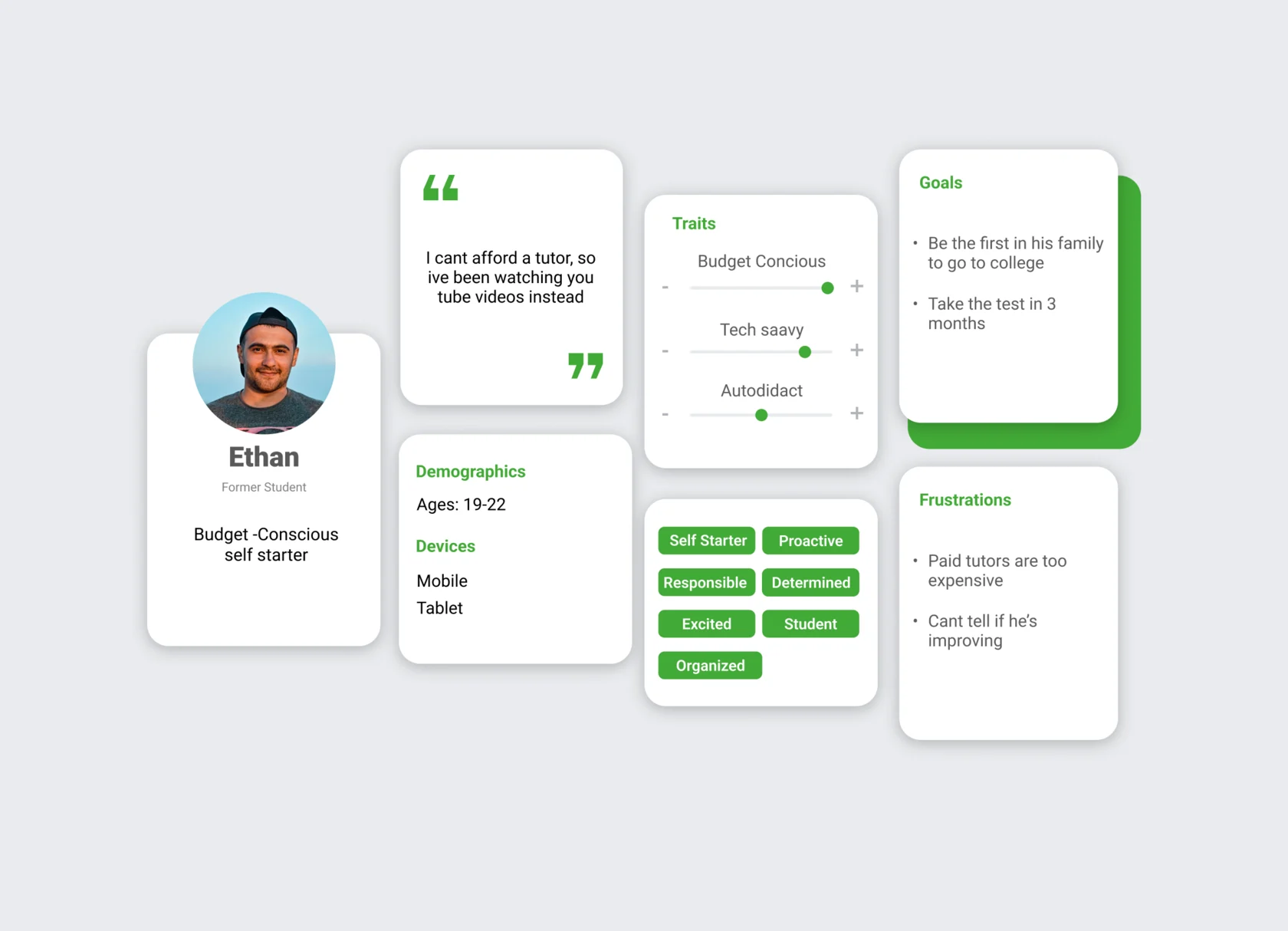
Using insights from the interviews, we segmented users by their core characteristics, primary challenges, underlying motivations and desired outcomes.
We created lightweight personas from these behavioral patterns to help the team understand user needs. They guided early decisions around onboarding and tone.
Ideate solutions
Onboarding flow
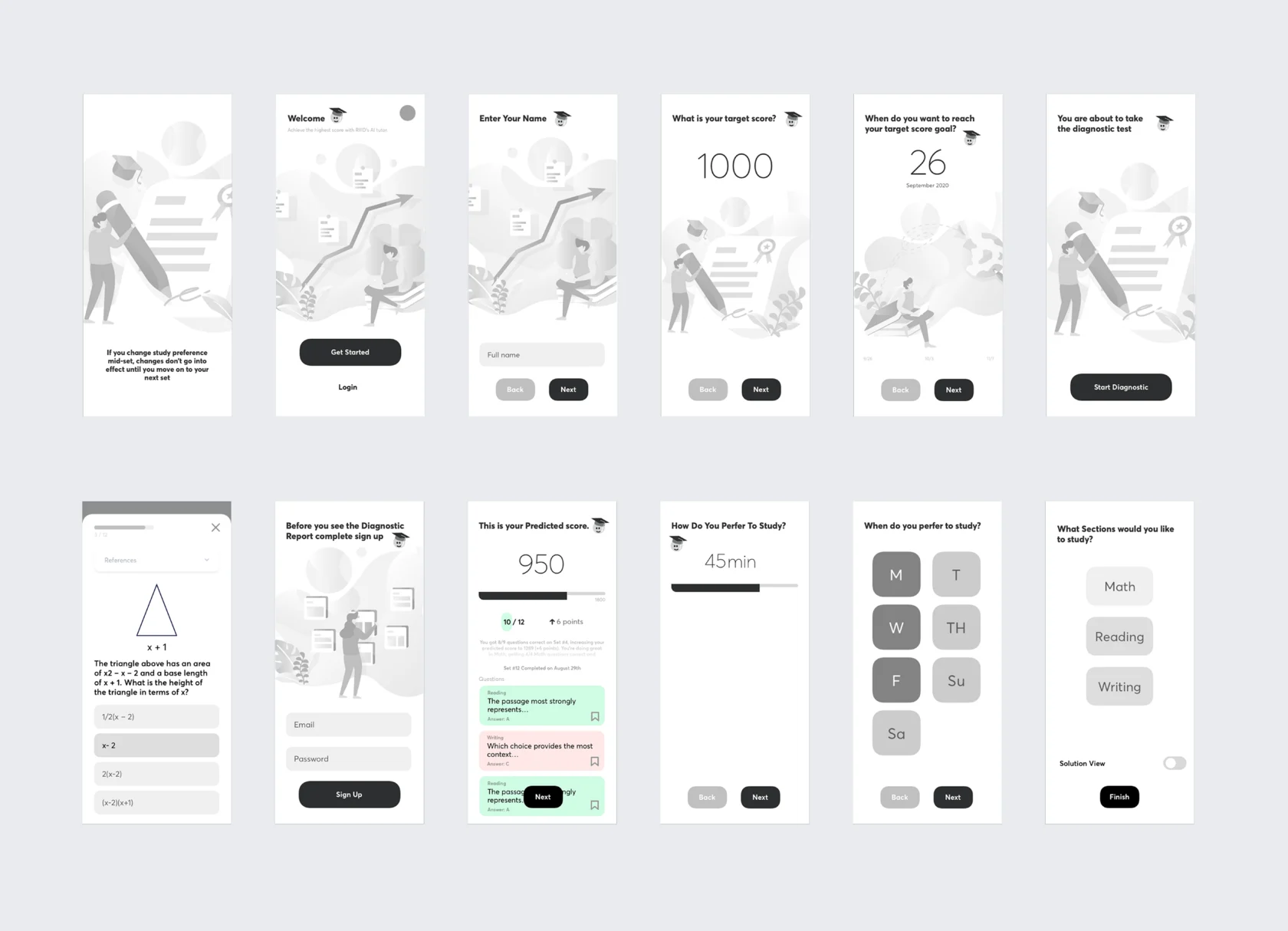
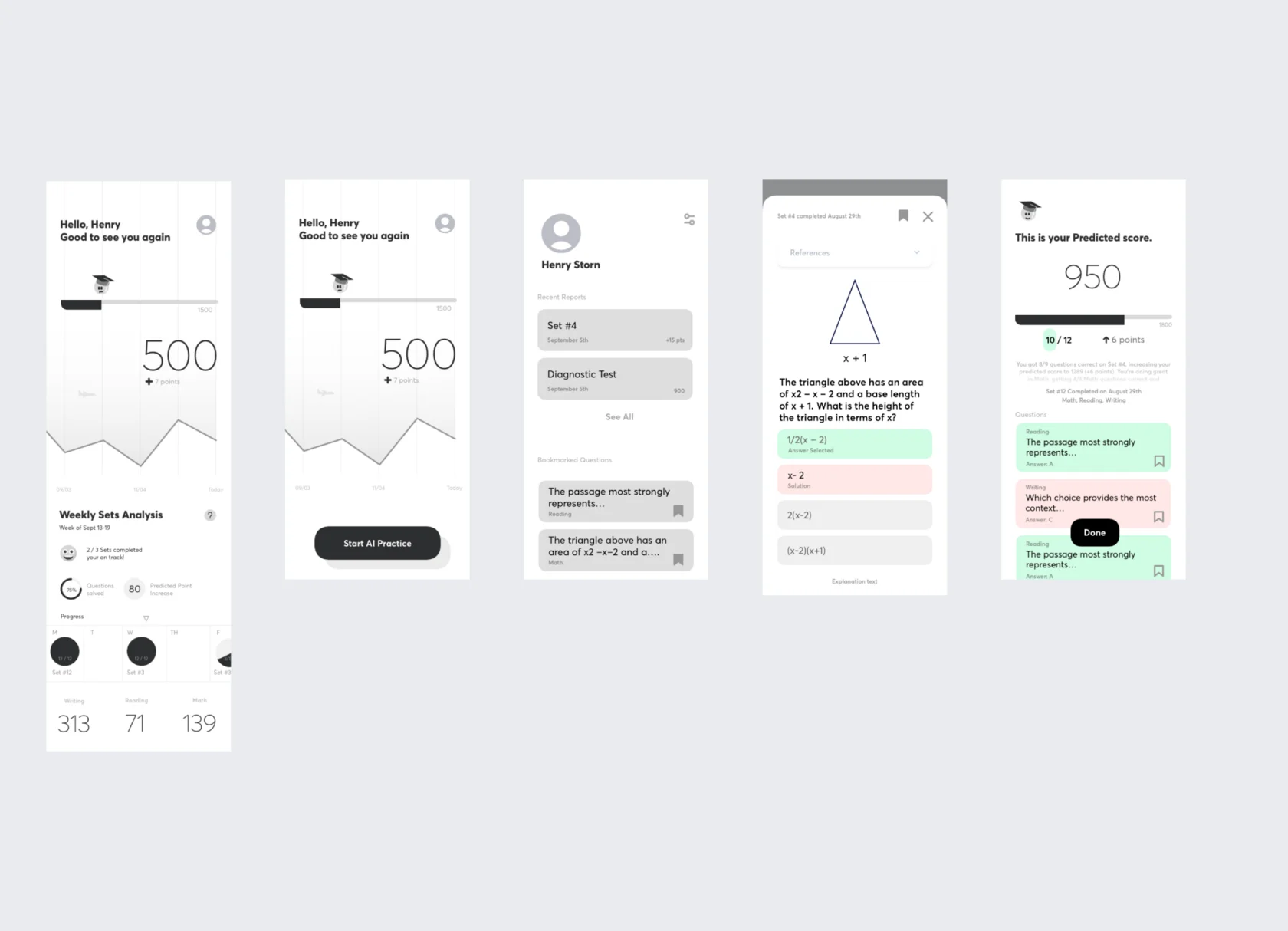
The insights and personas guided my wireframe ideation, so each user flow directly addressed real needs and kept the experience streamlined.
Moodboarding
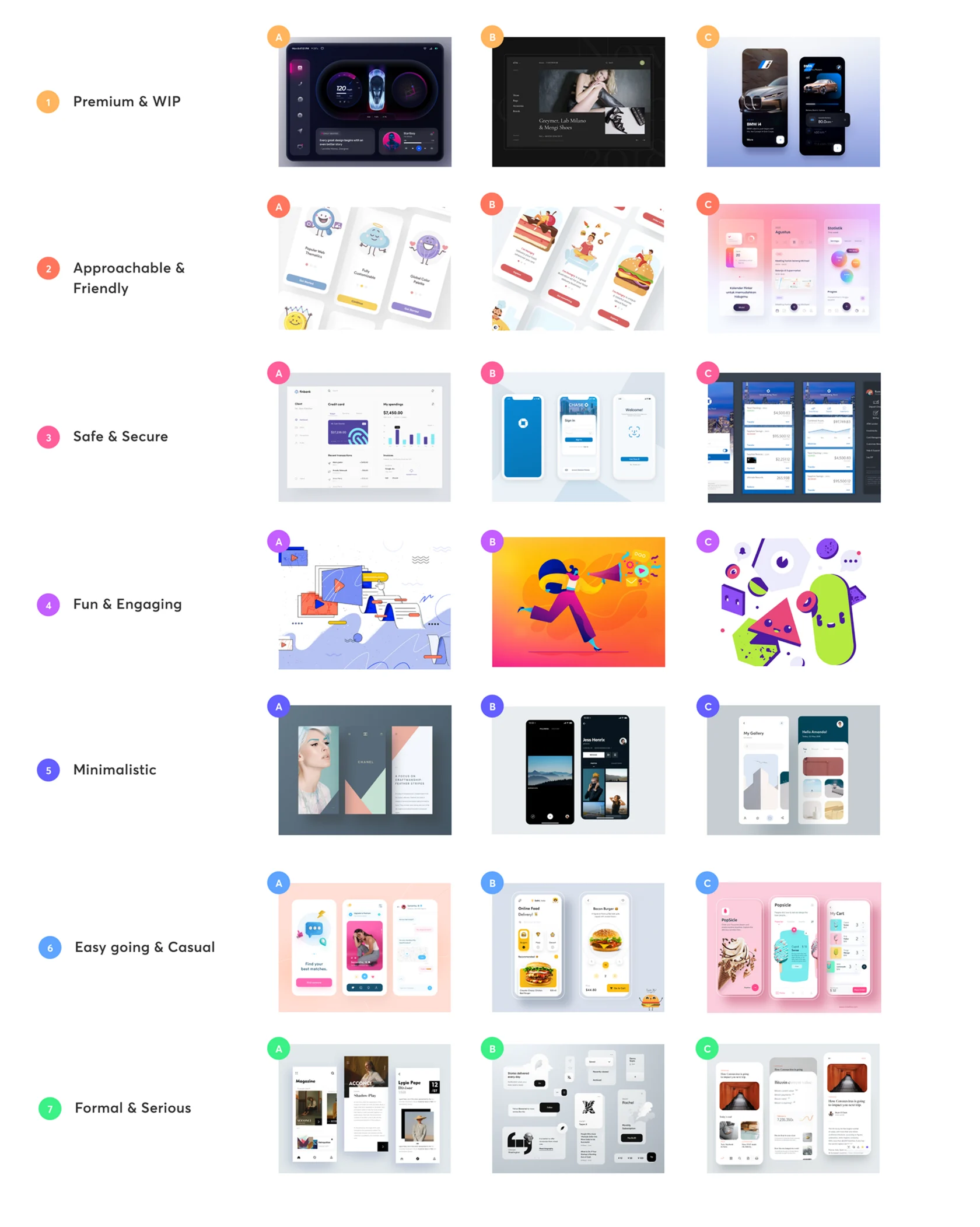
As a team we created a moodboard to share with the executives. I organized it into distinct visual directions to help us align on the aesthetic and tone that would best support the user experience.

An AI-driven tutor
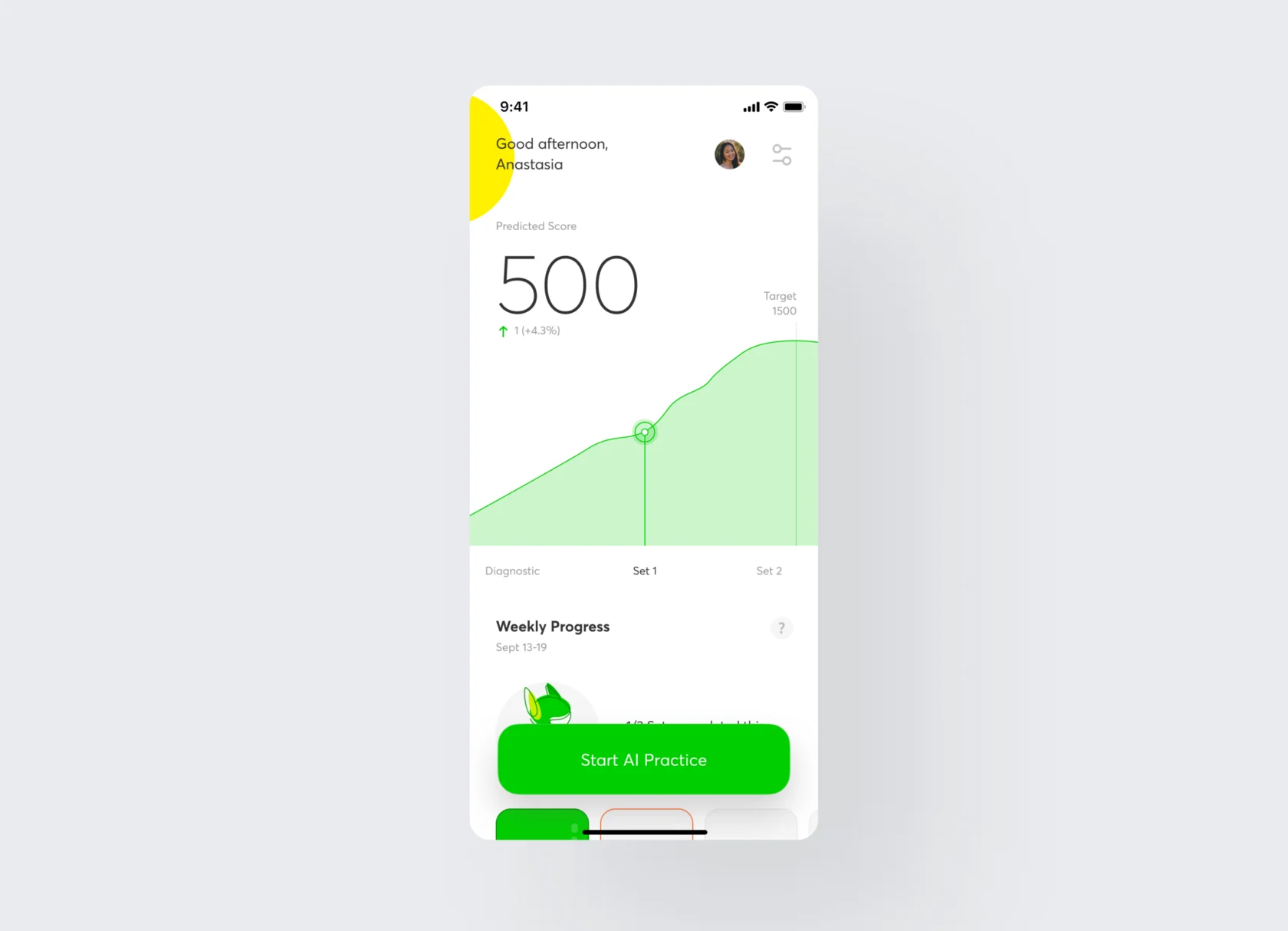
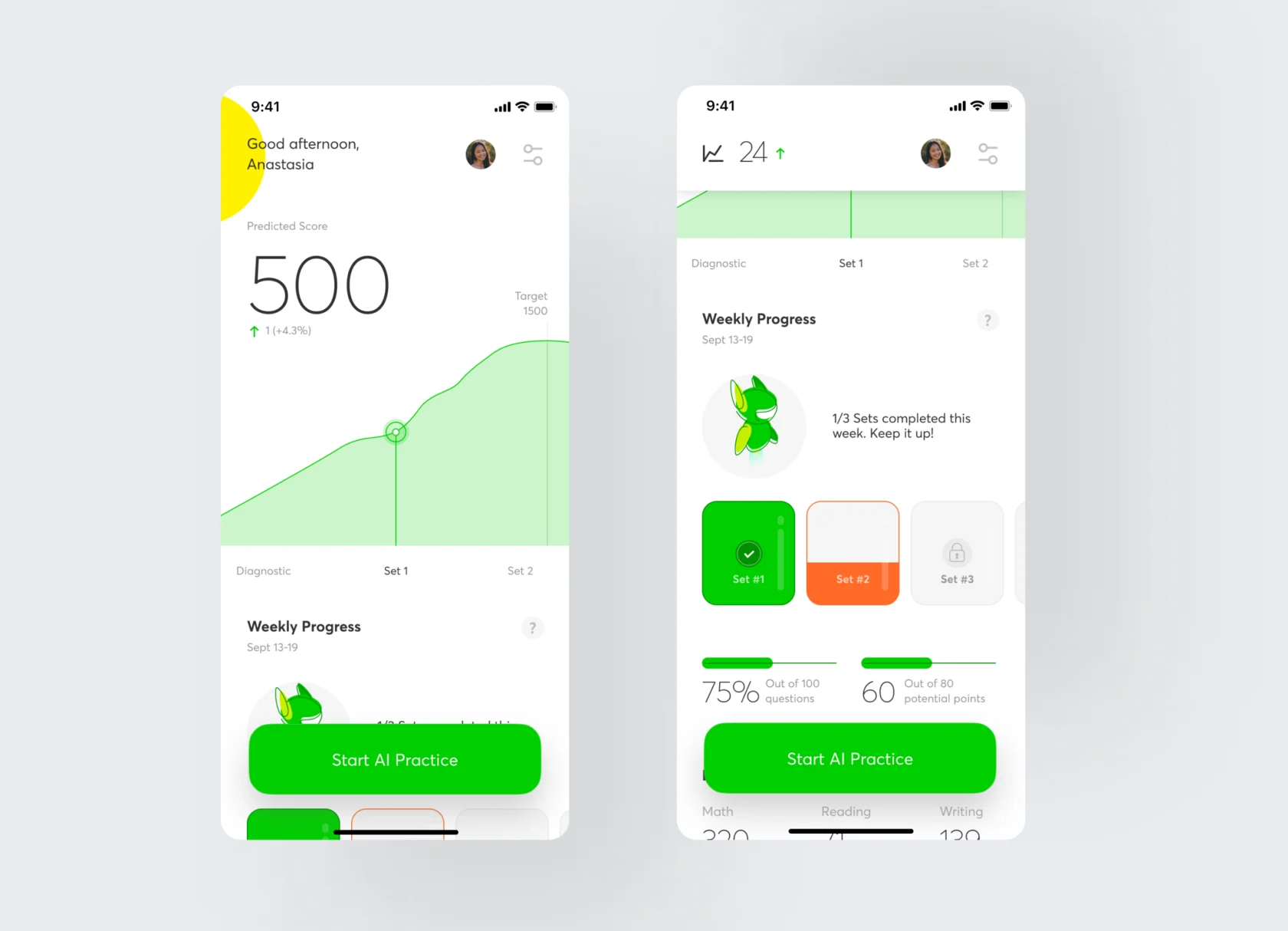
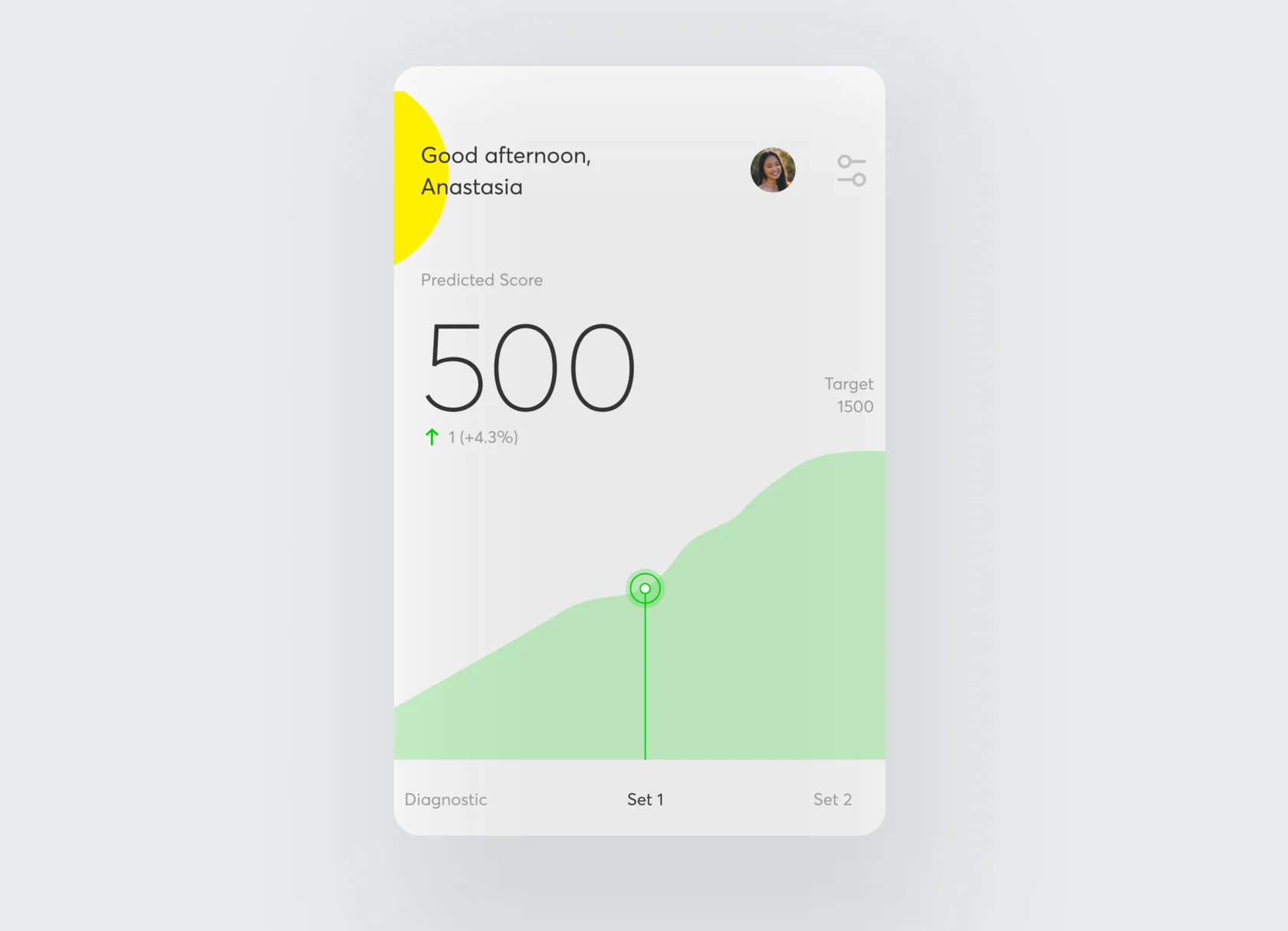
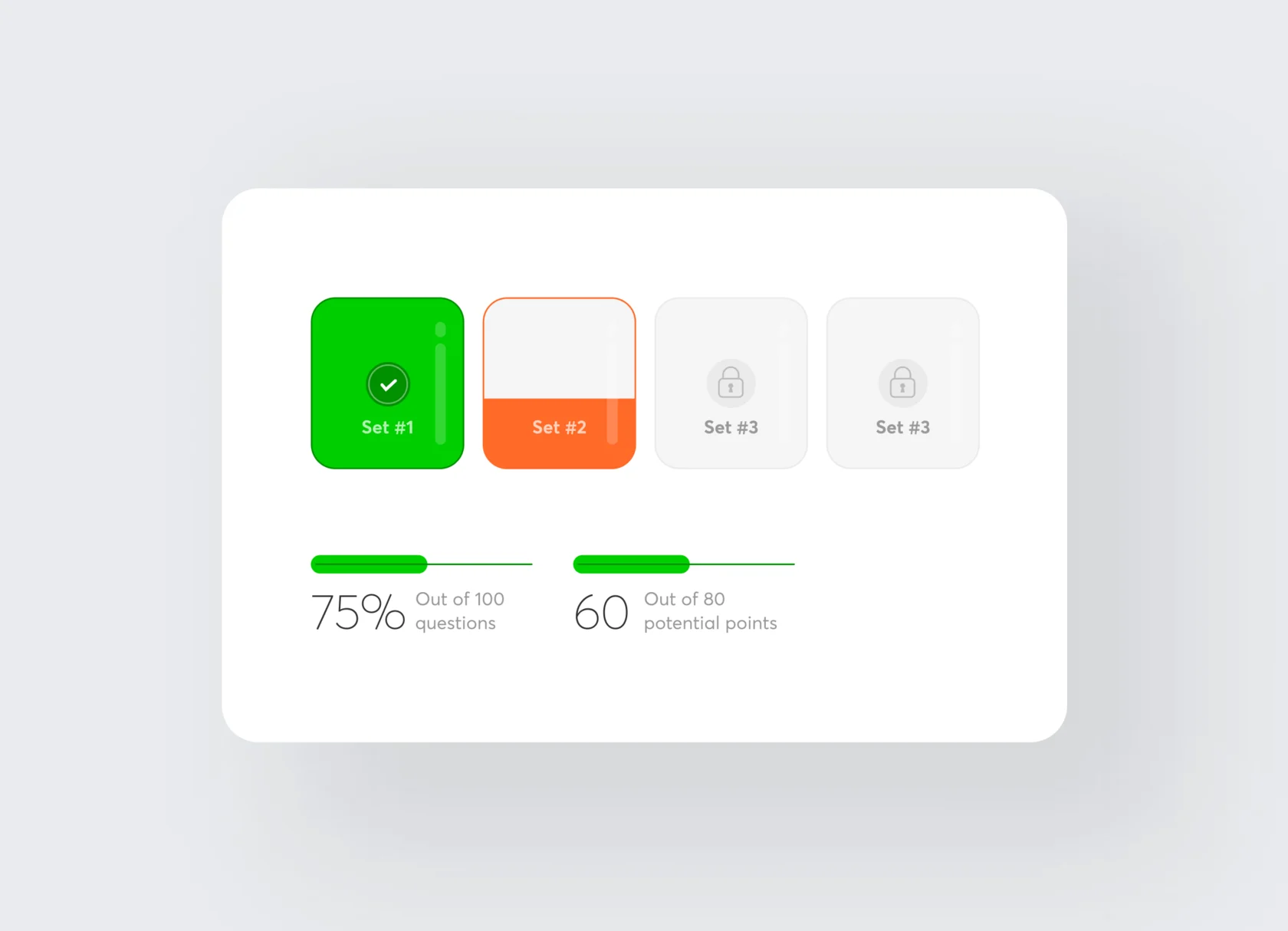
Tutoring is expensive for many students. Ivy Global offers an affordable alternative, an AI tutor that tracks progress and provides personalized SAT and ACT prep, so students arrive on test day well prepared and confident.
Practice test
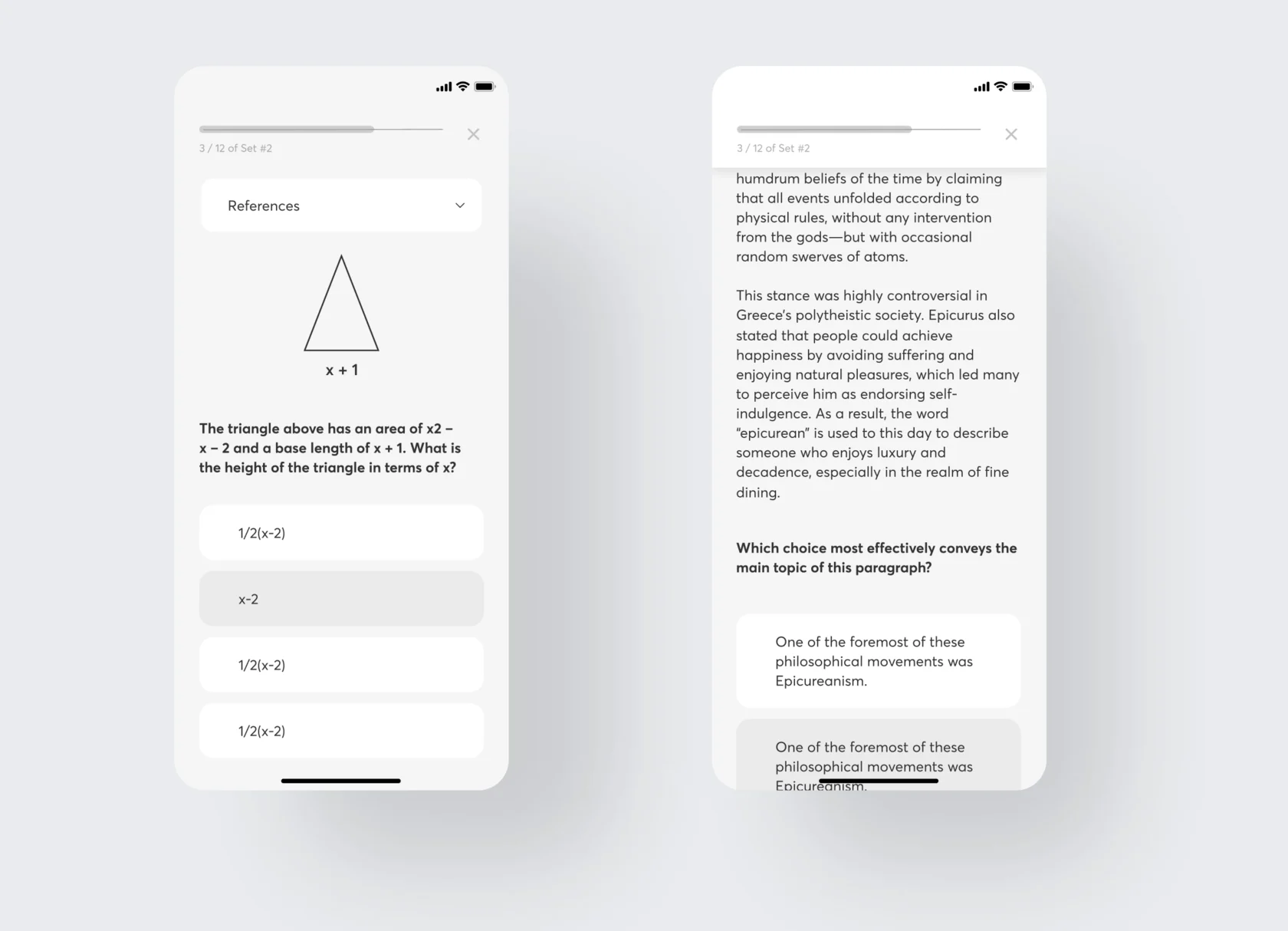
The practice test interface shows only the reference materials and the questions to complete, so students stay focused on the task at hand and simulate real exam conditions.
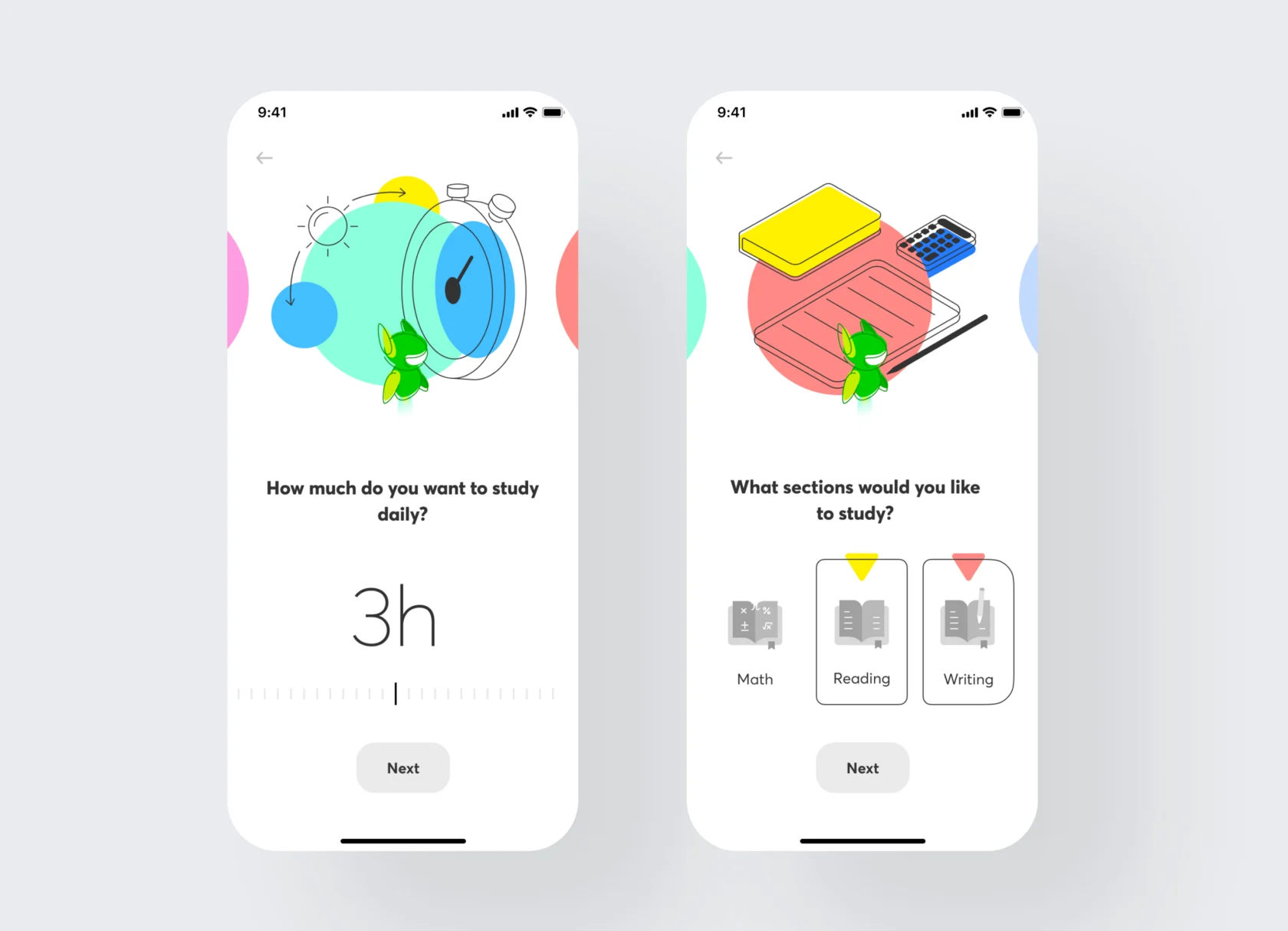
Onboarding
A step-by-step onboarding lets students customize their study plan. From the start they identify where they most need to improve, set goals and build a tailored learning path toward their desired SAT or ACT score.